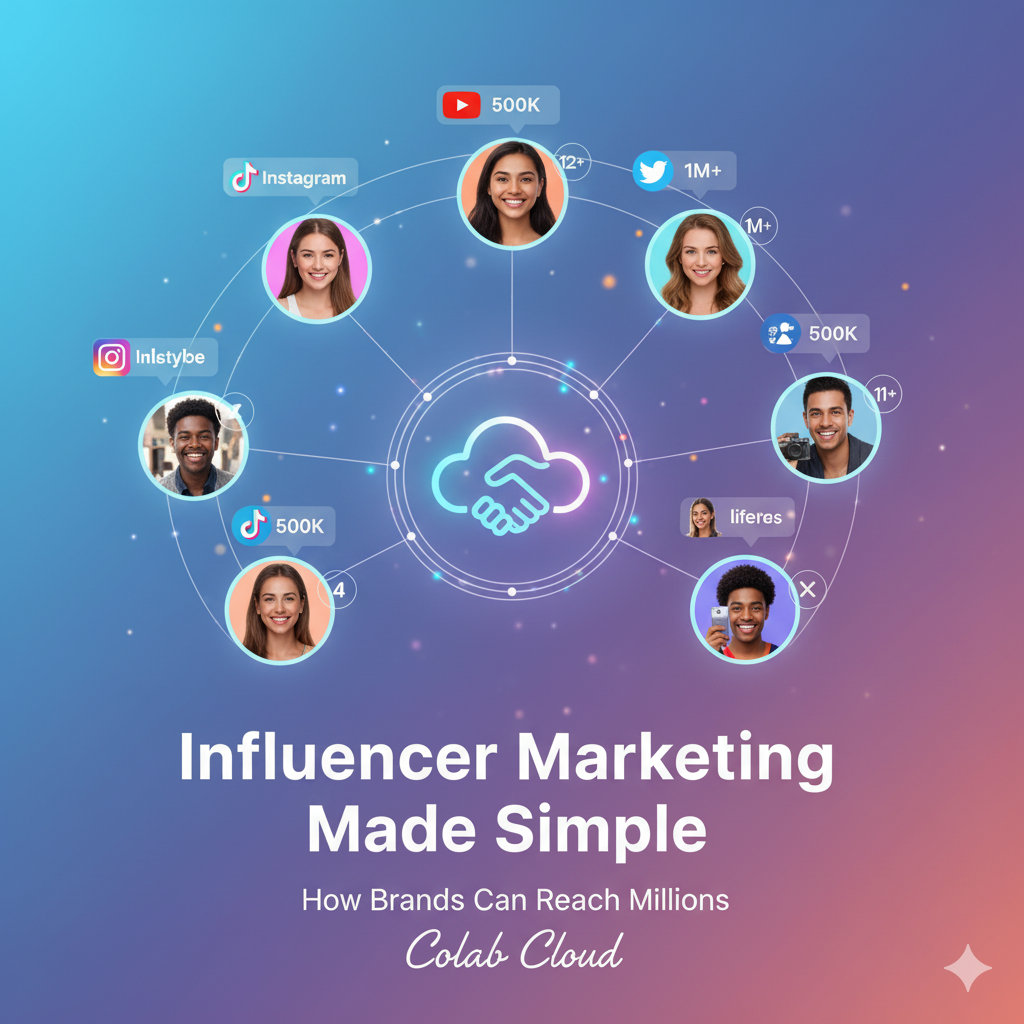
Influencer Marketing Made Simple: How Brands Can Reach Millions
Introduction
The digital landscape has changed how people discover brands. Instead of relying on TV ads or billboards, today’s consumers are influenced by the people they follow on Instagram, YouTube, TikTok, and other platforms. This is where influencer marketing comes in—a modern, powerful way for brands to reach millions of potential customers through trusted voices.
In this blog, we’ll break down what influencer marketing is, why it works, and how your brand can use it effectively to drive growth in 2025 and beyond.
🔹 What is Influencer Marketing?
Influencer marketing is a form of brand promotion where companies collaborate with social media influencers—individuals with a dedicated online following—to promote products or services.
Unlike traditional ads, influencer campaigns feel more authentic because they come from personalities that audiences already trust.
🔹 Why Influencer Marketing Works
Authenticity & Trust
People are more likely to buy when they hear about a product from someone they trust rather than a brand’s direct ad.Massive Reach
Social media influencers can reach millions of followers across different platforms.Targeted Promotion
Brands can collaborate with influencers who already engage the right audience—like fitness influencers for a protein shake brand.Higher Engagement
Influencer posts often get more likes, shares, and comments than traditional advertising.
🔹 Types of Influencers Brands Can Work With
Mega Influencers (1M+ followers)
Huge reach, global audience
Best for brand awareness campaigns
Macro Influencers (100K–1M followers)
Strong influence, wide niche reach
Perfect for scaling mid-size campaigns
Micro Influencers (10K–100K followers)
Highly engaged community
Cost-effective and trusted by niche audiences
Nano Influencers (1K–10K followers)
Smaller reach but extremely personal
Great for local businesses and community-driven brands
Platforms Where Influencer Marketing Thrives
Instagram → Best for lifestyle, beauty, fashion, travel, and food brands.
YouTube → Perfect for tutorials, reviews, and long-form storytelling.
TikTok (where available) → Trending short-form videos with high virality.
LinkedIn → B2B influencer collaborations, thought leadership, and industry expertise.
Twitter (X) → Real-time updates, trending conversations.
How to Build an Influencer Marketing Strategy
1. Define Your Goals
Do you want brand awareness, engagement, or sales? Clear goals guide the type of influencers you choose.
2. Identify the Right Influencers
Match their audience with your target market.
Check engagement rates (likes, comments, shares—not just followers).
Review their content quality and authenticity.
3. Set a Budget
Influencer collaborations can range from free product exchanges to high-paid partnerships. Decide how much you can invest.
4. Craft a Clear Campaign Message
Provide influencers with guidelines while allowing them creative freedom. Authentic content works best.
5. Track & Measure Results
Use tools and platforms (like Collab Cloud) to measure reach, engagement, clicks, and sales generated by influencer campaigns.
🔹 Benefits of Influencer Marketing for Brands
Boosts Brand Awareness → Millions can discover your brand in a single campaign.
Drives Sales → Influencers act as trusted promoters who influence buying decisions.
Improves SEO & Online Presence → Branded content shared widely increases visibility.
Strengthens Social Proof → Customers are more likely to buy when they see influencers using your product.
🔹 Common Mistakes to Avoid
Choosing influencers only by follower count (engagement matters more).
Giving influencers overly scripted content (kills authenticity).
Ignoring contract agreements (deliverables, timelines, payments).
Not tracking campaign ROI.
🔹 The Future of Influencer Marketing in 2025
AI & Data-Driven Matching → Platforms like Collab Cloud use AI to connect brands with the most relevant influencers.
Rise of Nano & Micro Influencers → Smaller influencers with higher trust will dominate.
Short-Form Video Growth → Reels, Shorts, and TikToks remain the most effective content formats.
Performance-Based Deals → More collaborations will be based on results (sales, clicks) instead of flat fees.
Integration with E-commerce → Shoppable posts and live-stream shopping are becoming mainstream.